
When Your Hotel Starts Competing With Itself -The Hidden Cost of OTA Rate Leakage
For many hotels, distribution should feel relatively straightforward.
You load your rates into your chosen OTA partners, manage promotions carefully, and expect your pricing to appear exactly where you intend it to.
But increasingly, that is not what hoteliers are seeing.
In fact, this has become an ongoing conversation in our hotelier community chat, with partners repeatedly raising concerns about rooms appearing on channels they do not work with directly - and often at lower prices than intended.
A guest may discover a cheaper rate on Agoda, another OTA, or even a partner listing on Booking.com, despite the hotel only contracting with one or two core channels.
And when that happens, what starts as a distribution issue quickly becomes a commercial one.
It impacts margin, undermines trust in the direct channel, and can quietly erode pricing confidence across the business.
At that point, the hotel is effectively competing with itself.
Why is this happening?
In most cases, this is not caused by a simple pricing error.
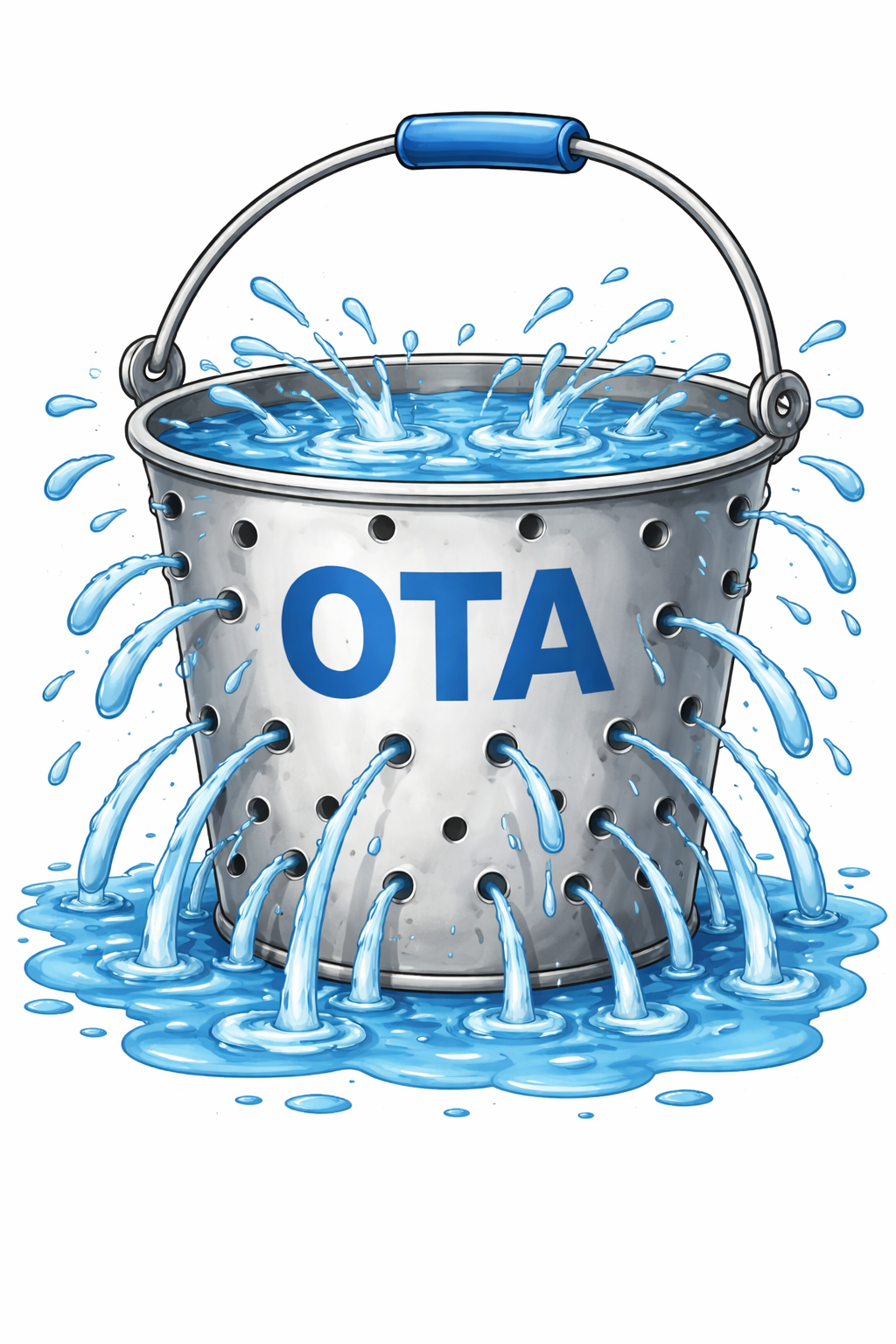
More often, the issue is rate leakage through indirect distribution.
Rates loaded into one OTA can find their way into the wider market through affiliate partnerships, B2B wholesalers, sub-agents, member-only discounts, opaque promotions, and auto rate-match tools.
In other words, inventory intended for one route to market begins surfacing elsewhere, often at a lower public price.
This is exactly what we are seeing repeatedly with partners - rates appearing in places the hotel has not intentionally chosen to sell through.
The commercial impact goes well beyond ADR dilution.
It affects margin, channel profitability, direct conversion, and, perhaps most importantly, guest trust.
If a guest can see your property cheaper elsewhere, your own website immediately feels less credible.
And that is where the real cost sits.
When visibility comes at the expense of profitability
One of the biggest drivers of this issue is the layering of too many OTA promotions.
Preferred partner programmes, member discounts, mobile rates, auto-enrolled campaigns and hidden offers can all widen the gap between your intended BAR and what the market eventually sees.
Hotels understandably sign up to these programmes in the belief that more visibility will lead to more revenue.
But that is not always what happens.
Too often, it simply means the same demand is being captured at a lower margin.
Rather than generating genuinely incremental bookings, channels begin undercutting one another for the same guest.
What should be a demand-generation strategy can quickly become a race to the bottom, with channels effectively competing against each other for business that was already likely to book.
More exposure without clear channel discipline is rarely a sustainable growth strategy.
Five practical steps hotels should take now
There are a few practical areas every commercial team should be reviewing.
First, audit all active OTA promotions weekly. Do not assume campaigns remain static. Some OTAs are increasingly moving towards opt-out promotional models, meaning hotels may be automatically enrolled in sales activity unless they actively remove themselves.
Second, carry out regular test bookings. This remains one of the most effective ways to identify leakage and trace where the booking is actually landing in the PMS.
Third, review wholesaler and FIT agreements carefully. B2B partners and wholesalers are frequent sources of parity issues, particularly where inventory intended for offline distribution finds its way online.
Fourth, be honest about underperforming discounts. If preferred partner programmes, member rates or opaque promotions are not delivering genuinely incremental demand, they may simply be shifting existing bookings into lower-margin channels.
And finally, protect the direct booking proposition. Your website should always feel like the most trusted place to book. It does not always need to be the absolute cheapest, but it should never visibly lose on value.
The bigger commercial question
Ultimately, this comes down to commercial ownership. The strongest-performing hotels are not necessarily the ones with the widest OTA exposure.
More often, they are the ones with the clearest distribution strategy, the strongest parity discipline, and the confidence to prioritise profitable demand over volume for volume’s sake.
Because sustainable growth is not about selling more rooms at any cost.
It is about ensuring your business is not unknowingly discounting against itself.
And perhaps that is the bigger question commercial teams should be asking right now:
Are your channels supporting your strategy — or quietly working against it?
